Khakis.blog

there’s always a bigger fish…

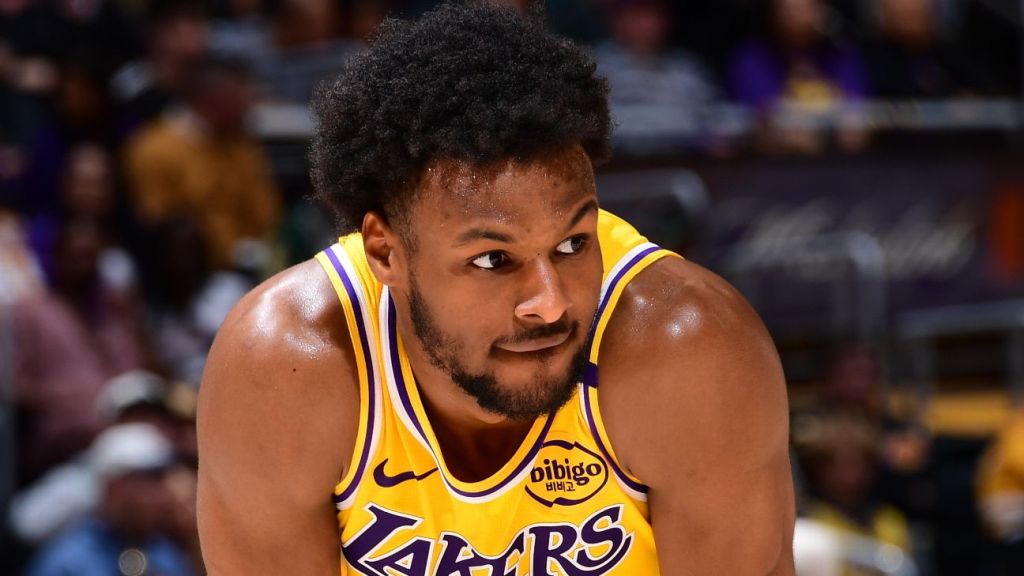
  • In the landscape of professional sports, few names carry more weight than LeBron James. As the son of arguably the greatest player in NBA history, Bronny James has faced levels of pressure and scrutiny previously unseen for a second-round pick from the moment he stepped onto the court. In his rookie season as a two-way player for the Los Angeles Lakers and their G-League affiliate the South Bay Lakers, Bronny has been the subject of extreme criticism, with many questioning his on-court talent, the Lakers’ decision to draft him, and the fairness (or lack thereof) to other worthy NBA prospects whose life goal is to make it to the league. However, Bronny’s NBA journey so far is proving to all of us that much of this criticism is sensationalized and unfounded. Outside of the media circus, Bronny is being treated like any other second-round pick by JJ Redick and the Lakers, spending most of his time in the G League while riding the bench during home games for the NBA team that drafted him. JJ has given him very limited and infrequent run in real games, recognizing a need for him to continue developing in the G League. Outside of a ~5-minute on-court stretch on opening night that will primarily serve as footage for his father’s future Netflix documentary, Bronny’s opportunity for NBA minutes has been predicated on what he’s delivered during practice and in G-League runs. After a few failed attempts at non-garbage time NBA minutes, Bronny showcased his ability to contribute during an extended run on March 20. While the media circus and often-blinding spotlight on him are inevitable due to his name and family legacy, Bronny is doing exactly what he needs to be doing and is not the NBA “nepo-baby” that many paint him to be.

    A Typical Second-Round Journey

    Like most university second-round picks, Bronny has spent the majority of his rookie season in the G League, building confidence and developing a feel for the pace and physicality of basketball at the professional level. This is the most common path for players who were drafted outside the first round or not drafted at all, who often need time to further develop before they can contribute at an NBA level. Notable exceptions to this rule can usually be explained by circumstance – older second-rounders like Dennis Rodman and Mark Price were drafted before the G-League existed, and more recent second-round stars such as Manu Ginobli and Nikola Jokic played overseas in place of the G. Take Khris Middleton and Danny Green, for example – both second-round draft picks who spent significant time in the G League their rookie year before becoming great players and NBA champions. Bronny’s path mirrors this trajectory so far; he has the chance to to grow and improve in a lower-pressure environment with the South Bay Lakers, while learning from the veterans and getting a taste of NBA-level action when he shares the bench with his NBA teammates. And Bronny has been nothing short of productive in the G-League, averaging 17.4 points, 4.2 rebounds, and 4.3 assists in 16 games through time of writing. Behind these numbers are a steady improvement in shooting, playmaking, and an overall grasp of the game – critical abilities for a 6’3 guard to possess if he wants to make an impact at the top level.

    Par for the Course

    When he does take the court with the Los Angeles Lakers, Bronny has received minimal playing time, averaging just 5 minutes across 20 games and posting a modest 1.7 points per game. Limited playing time like this is fairly usual for a second-round pick, particularly one like Bronny that is still finding his footing in the league. The Lakers have their deepest roster since their championship run in 2020 that is headlined by a future hall of famer in Luka Doncic that plays Bronny’s position, so the competition for Bronny’s potential minutes is fierce. Yet, Bronny continues to do the right things and showcases his potential when opportunity arises, with his March 20 performance standing out as a prime example—more on that in a moment. For now, I will reiterate that Bronny’s current role on the Lakers’ bench is in full alignment with the typical development arc of a second-rounder and is neither an endorsement nor an indictment of his abilities.

    A Glimpse of What’s to Come

    Back to Bronny’s big game that prompted the writing of this essay. On March 20, the Lakers were set to go head to head with interconference contenders the Milwaukee Bucks on the second night of a back-to-back. However, the Lakers were plagued by injuries, with six players declared inactive for the game, including four starters – LeBron James, Luka Doncic, Rui Hachimura, and Austin Reaves. In the wake of this hardship, Bronny finally got his opportunity to play extended minutes and seized the moment. In 29 minutes off the bench, he dropped 17 points on 70% shooting from the field (50% from three), grabbed 4 boards, and dished out 3 assists. While his teammates and coaching staff were clearly excited for Bronny, no one seemed surprised. It was a reminder that development isn’t linear- young players like Bronny need time and patience while they adjust to the speed, physicality, and talent level of NBA basketball. It is now Bronny’s responsibility to prove to critics that were quick to dismiss him as a product of nepotism (Stephen A – looking at you) that performances like these are evidence of his potential rather than a fluke in an otherwise unproductive rookie season.

    The Spotlight: Inevitable, But Not Defining

    There’s no denying the fact that Bronny faces a level of scrutiny few other players – let alone second-round rookies – ever have to endure. As the son of the NBA’s king LeBron James, his every shot, sentence, and mannerism is dissected by the media and NBA fans ad nauseum, creating a whirlwind of discourse that amplifies both his accomplishments and his struggles. We have to be careful not to confuse the brighter spotlight – which is an inevitable byproduct of his name and family legacy – with a reflection of his abilities on the court. Although many fans and haters claim that Bronny is receiving preferential treatment, he is actually being held to a higher standard than any other second-round pick that I can recall, and he is carrying this burden with remarkable poise for a 19-year old whose sole reason for being here is due to a love for the game. JJ Redick has repeatedly praised his work ethic, calling out both his successes and potential along with his shortcomings as they make themselves known. It is clear that Bronny has remained focused on his growth through all the noise, and that maturity is a testament to his character.

    Addressing the Critics

    Some media personalities (still looking at you Steve) will continue to argue that Bronny is only in the NBA because of his father, suggesting that the Lakers wouldn’t have taken a flyer on him without the name that LeBron Sr. has publicly expressed regret for bestowing upon his son. And I will admit: it’s fair to acknowledge that his father’s interest in becoming the first father-son duo in NBA history likely played a role in his selection – but that’s where the story of Bronny James diverges from the criticism. Plenty of “nepo babies” have entered the league. Hell – LeBron has played against most of their fathers (*deep inhale*… Jabari Smith Jr., Gary Trent Jr., KJ Martin, Gary Payton II, Jalen Bruson, Adrian Griffin Jr., Glenn Robinson III, Jabari Walker, Glen Rice Jr.). All of these players’ successes hinge on talent and effort, not just their last name, with Bronny’s only differentiator being that his father had the longevity to stick around in the NBA like a helicopter parent first-grade teacher. All year, Bronny has demonstrated a willingness to grind and earn his place in the league. His G League stats and flashes of excellence in limited NBA minutes point to real potential. Add in his defensive instincts and unique athleticism for his size, both often overshadowed by his shooting struggles, and it’s clear he’s more than a legacy pick to appease a star.

    The Bottom Line

    At the end of the day, Bronny James’ critics might be loud, but the work speaks louder. He’s being treated like any other second-round pick- splitting time between the G League and the Lakers’ bench, logging minimal NBA minutes, and steadily developing his game. His breakout performance against the Bucks showed what he’s capable of when given a chance, while his G League progress highlights a young player that is learning how to climb to their potential. The media frenzy of his rookie season was unavoidable given his lineage and will likely follow him to some extent for the rest of his career, but so far Bronny has been handling it with grace and doing exactly what’s expected of a rookie in his position- no more, no less. As he continues to develop and improve, we will likely see the narrative shift. For now, though, Bronny James is right where he needs to be, and critics will soon learn that if you come at the King(‘s son), you best not miss.
    + ,
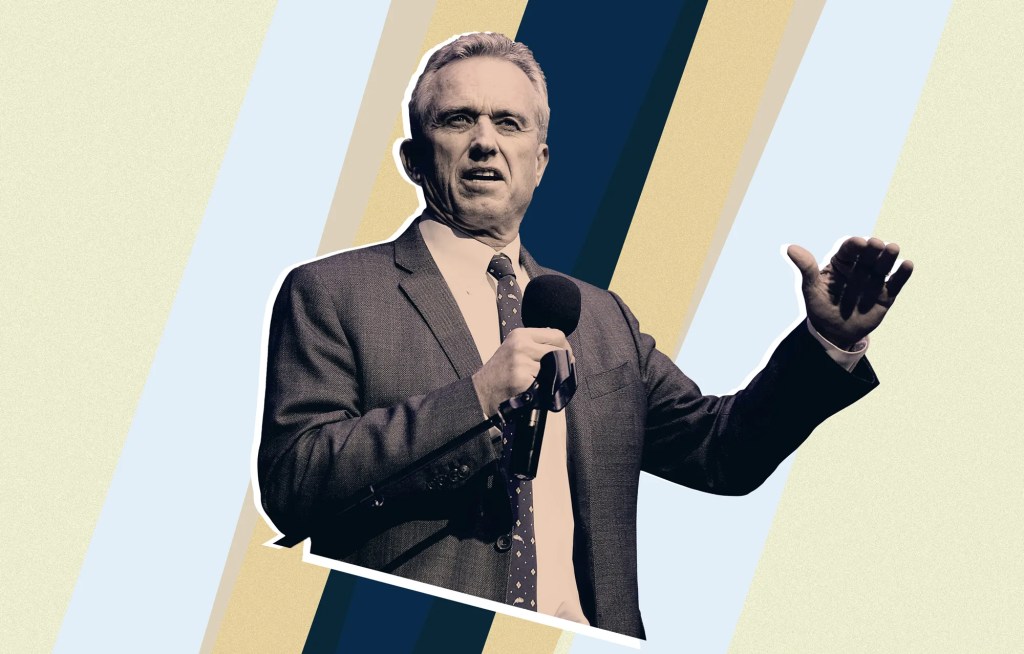
  • Robert F. Kennedy Jr. (RFK Jr.) is a member of the iconic Kennedy family (known around my house as the Kardashians of politics) and is one of the most controversial figures in modern American politics and activism. He first rose to prominence through environmental activism, building a platform by championing causes such as clean water and air – even going as far as pursuing legal action against corporations who harmed the environment through his organization The Waterkeeper Alliance. As time passed, however, RFK Jr. has become just as recognizable for polarizing and frequently baseless claims about American health topics, most famously through his repeated denouncement of modern vaccines, frequently repeating debunked claims linking vaccines to Autism Spectrum Disorder in children. His affinity for fringe conspiracy theories carries over into the world of food health as well, where he is known for denouncing additives, pesticides, and processed foods through unfounded beliefs that lack solid evidence. Politically, RFK Jr. has carved out his niche as a contrarian, critiquing both conservative and liberal policies in favor of populist opinions. In a world where politics are demonized (and often rightfully so), this contrarian positioning has helped RFK Jr. garner a devout following, where his supporters can find solace and pride in the fact (read: feeling) that they are the only ones who don’t have the wool pulled over their eyes. 

    When we take a look at RFK JR.’s food health advocacy and compare it to the policies and ideals of the Trump administration (of which RFK Jr. resides as a member of Trump’s cabinet and leader of the Department of Health and Human Services), we can find profound hypocrisy). Historically, RFK Jr. has tried to market himself as a public health advocate that is fighting chronic disease through diet reform. On the other hand, the Trump administration has systematically disassembled environmental health regulations and guardrails that are grounded in fact and rigorous research, choosing to instead prioritize corporate interests over the well-being of the American people. This essay explores the dissonance between RFK Jr.’s food health rhetoric (albeit speculative) and Trump’s disdain for critical environmental safeguards and desire to protect corporate bottom-line, a juxtaposition that misleads the public and undermines genuine health-based efforts.

    RFK Jr.’s Conspiracy-Driven Food Health Agenda

    RFK Jr.’s stance on American health centers around a critique of the American diet and food system, a system that he claims has been corrupted by corporate greed and the incompetence of bureaucracy. He often asserts that processed foods, additives, food dyes, and pesticides are the driving factors behind American healthcare epidemics such as obesity, diabetes, and autoimmune disease. This is an example of the motte-and-bailey fallacy, often used in modern political discourse, where someone presents a widely accepted or easily-defended statement (the “motte”) as a foundation and uses it to support a more controversial or unfounded claim (the “bailey”). While these concerns warrant scrutiny (motte), RFK Jr.’s approach often veers into conspiracy territory (bailey). For instance, he has repeatedly accused the Food and Drug Administration (FDA) and Centers for Disease Control and Prevention (CDC) of colluding with Big Pharma to keep Americans sick, offering little to no concrete evidence outside of ever-changing anecdotal claims. His castigation of seed oils and artificial food dyes similarly lacks any real scientific backing, relying instead upon fringe conspiracies that tap into listeners’ fear rather than reason.

    RFK Jr.’s affinity for misinformation can also be examined through his history as an anti-vax advocate. His repeated promotion of the repeatedly-debunked link between vaccines and autism shows us a willingness to prioritize personal opinions over facts. In the food health world, this tendency manifests itself through policies like banning fluoride from drinking water, citing “studies” suggesting it lowers children’s IQs while ignoring its proven benefits for Americans’ dental health. Similarly, his push to eliminate ultra-processed foods from school lunches – while genuinely appealing – lack the empirical foundation needed for a sweeping shift in policy. By dismissing robust research in favor of hunch-based opinions, RFK Jr. is simultaneously misleading the public while eroding trust in scientific institutions.

    The Trump Administration’s Assault on Evidence-Based Environmental Protections and Healthcare Access

    In stark contrast to RFK Jr.’s alleged concern for Americans’ health, the Trump administration’s environmental record is defined by peeling back regulations backed by solid scientific evidence. During Trump’s first term, he weakened or destroyed over 100 environmental laws, a choice that prioritized corporate profits at the expense of public health. An often-cited example of this lies in the administration’s rejection of a ban on chlorpyrifos, a farming pesticide heavily used in central California with a proven link to neurological damage for those that handle and consume it, despite comprehensive research confirming the chemical’s risks. Trump’s EPA also significantly relaxed guidelines on air pollution and industrial chemicals such as methylene chloride – another substance proven by science to be fatal in large quantities. In the first few months of his second term, Trump has escalated these efforts through executive order and mass-scale federal layoffs. These de-regulations and cutbacks are usually justified as being “good for the economy”, but they directly undermine the public health that RFK Jr. claims to so vigorously support.

    Aside from its repeal of environmental protections, the Trump administration’s healthcare strategy provides us yet another angle to view the administration’s seeming indifference to Americans’ well-being. A hallmark effort of Trump’s first term was the repeated attempt to repeal the Affordable Care Act (ACA), which is an Obama-era law that provides health insurance to millions of Americans and maintains affordability in the event of pre-existing conditions, significantly and tangibly reducing the rate of uninsurance for low-income families. Even so, Trump pushed and pushed to dismantle it (often without any clear or viable replacement), which threatened to strip coverage from millions of America’s most vulnerable, leaving them at risk of preventable illnesses and potential financial ruin. This effort stood in direct contradiction of evidence showing that access to affordable and comprehensive healthcare is a proven determinant of a nation’s public health, revealing Trump’s true colors and a willingness to sacrifice the health of the American people for political gain. By undermining access to healthcare, the Trump administration didn’t just ignore American health – it exacerbated the very chronic conditions that RFK Jr. claims to target, showing a clear disconnect between the administration’s actions and any genuine commitment to human well-being.

    The Hypocrisy and Its Consequences

    The hypocrisy of RFK Jr.’s crusade for American food health and Trump’s concurrent dismissal of proven environmental health risks is more than just an example of government inefficiency (look over here DOGE!), it is a well-designed distraction tactic. While RFK Jr. shines the spotlight on the alleged toxicity of seed oils, the administration of which he is a member actively exacerbates real health risks such as air and water pollution. This creates a paradoxical pattern: speculative fears about food additives draw the public’s attention, while scientifically proven threats to public health are quietly ignored or enabled. RFK Jr.’s “Make America Healthy Again” (MAHA) initiative, which hopes to address chronic disease through food policy reform, is somehow aligned with an administration that has consistently chosen deregulation over health and corporations over the American people, revealing a disconnect between one man’s rhetoric and the broader political reality.

    While the argument remains of whether this tactic is intentional, the bottom line is that this misalignment has serious implications. RFK Jr.’s conspiracies divert our focus from real environmental health crises that disproportionately harm low-income communities and communities of color. For instance, Trump has quietly enabled an increase in air and water pollutants that are proven to increase rates of chronic diseases in these groups, while RFK Jr.’s talk tracks keep our focus on unsubstantiated food-related fears. Additionally, his proposed reforms lack logistical thoroughness. For example, banning processed foods in schools could inadvertently strain the budgets of underfunded school districts and actually increase food insecurity, undermining MAHA’s alleged goals. In contrast, Trump’s rollbacks have immediate, tangible consequences – higher rates of disease and mortality – that demand the public’s urgent attention.

    Conclusion

    The juxtaposition of RFK Jr.’s conspiracy-riddled food health directives and the Trump administration’s rollbacks of fact-based environmental guardrails represents a dangerous hypocrisy. While the self-proclaimed “Food Czar” is feeding the public unproven claims of corporate corruption and additive ailments, the Commander in Chief dismantles regulations and policies that protect Americans from scientifically validated health risks. This dynamic not only misleads the public but also shifts focus away from critical health priorities, such as clean air and water, toward speculative dietary concerns. To truly improve public health, policymakers must reject conspiracies in favor of evidence-based solutions, addressing both the proven environmental hazards and the legitimate questions about food safety with rigor and reason. Only then can we truly Make America Healthy Again.

    + ,
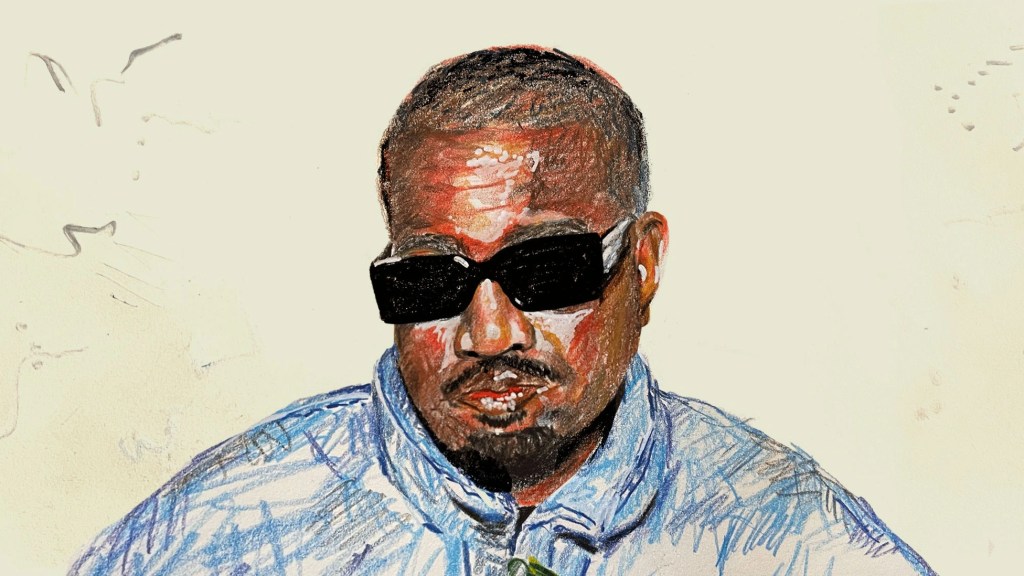
  • Agamemnon, Oedipus Rex, The Persians… we may need to add a name to the list of classic tragedies: Ye (FKA Kanye West). Ye’s evolution (if you can call it that) over the past 5-10 years has equally stunned and fascinated current and former fans of the rapper. At one point universally beloved for his role in modern hip-hop history, he now stands firmly at the center of debates about accountability, mental health, and the ethical obligation of artists and celebrities. Ye’s fall from grace is not simply a tale of hubris and celebrity disconnect, but rather a complex story of how the genius of one of our favorite artists unraveled into emotional turmoil. It’s important to think about what led to his decline and empathize with his personal struggles while still condemning his harmful statements and actions. Many also are forced to wrestle with the urge to appreciate his past work while still making their voices heard through consumer choice.

    From Icon to Outcast

    Ye’s ascension into superstardom was unprecedented. His rapping debut “The College Dropout”, released in 2004, was a breath of fresh air in the hip-hop scene, blending his already-acclaimed production with introspective, clever, and catchy lyrics that many didn’t know Ye was capable of delivering. The artistic catalog that followed cemented his status as a musical visionary, with many rap fans considering his three-album run of “Graduation,” “808s & Heartbreak,” and “My Beautiful Dark Twisted Fantasy” as the greatest three-album run in hip-hop history. Outside of his music, Ye went on to influence fashion and repeatedly challenge cultural norms, furthering his image as a maverick and visionary. However, aside from his successes, patterns of erratic and troubling behavior would emerge – most notably through a foreshadowing moment at the 2009 VMAs.

    More recently, Ye’s trajectory has begun to veer into unsettling territory. His early endorsement of Donald Trump, the erratic and failed 2020 presidential bid that would follow, and his recent affinity for conspiracy theories and hate speech has taken him from provocative to problematic. This behavior came to a head through his intense anti-Semitism, which was met with almost universal outrage that led to severed business ties and an eroded and tired fanbase. The man who we once considered an eccentric genius has become a hateful pariah, with fans and onlookers left to pick up the pieces.

    A Mental Health Crisis Unfolds

    Ye has publicly acknowledged his struggles with depression and bipolar disorder. These conditions often lead to extreme mood swings, oscillating between impaired states of energetic mania and depressive lows. Ye’s symptoms have typically manifested through chaotic and grandiose decisions, problematic and typo-riddled Twitter/X rants, and what has seemed to be a complete detachment from reality – as seen in his online tirades and seemingly messianic self-image. Many still choose to write this off as just eccentricity, but we have to call a spade a spade; this is a full-blown mental health crisis, where one man’s inner chaos is put on display for the world to see.

    How did we get here? It is likely true that the effects of extreme fame on the human mind and ego are at least partially to blame. Many aspects of Ye’s life have been filmed, posted, and discussed in the public forum for more than two decades. The loss of his mother Donda in 2007 and subsequent divorce from his wife Kim Kardashian robbed Ye of stabilizing figures in his life, while his fortune and celebrity have attracted enablers to his inner circle rather than the guardians and allies that we all need. This crisis has been allowed to snowball by a lack of good-willed intervention and a desire to remain at the center of the zeitgeist. Ye’s story outlines a harsh truth: mental illness doesn’t care who you are or how successful you’ve been. Sometimes, the same spotlight that illuminates you can also destroy you. 

    Empathy and Accountability: Walking the Line

    I will be the first to say that, despite his actions, Ye deserves our empathy. Mental health conditions are no less real or valid than physical ones, and Ye’s unwinding is a reminder that no one is immune to these challenges. His internal distress, intensified by fame and constant praise, paints a picture of a man who is lost, not simply a villain that exists for us to denigrate. However, I understand that empathy has its limits. It is no secret that Ye’s hate speech and still-massive platform have caused substantial harm, and he has crossed lines that cannot simply be written off as mental illness symptoms. Understanding his crisis can provide context, not exoneration. 

    Rejecting Ye’s actions isn’t just the right thing to do – it isn’t negotiable. Words have power, and Ye has chosen to use them to further hate and division. While an understanding of his condition provides us with an explanation, it does not dismiss him from accountability. It is our duty as a society to reject hate regardless of its source, and Ye’s seeming refusal to acknowledge any wrong-doing is simply salt in the wound. Empathy and criticism aren’t mutually exclusive: it is valid to recognize the struggles he’s faced while standing behind the consequences of his actions.

    Art, Artist, and the Consumer’s Dilemma

    But is it possible to separate the art from the artist? Older tracks like “Runaway” and “Devil in a New Dress” live on as a testament to his talent. Some fans of hip-hops view much of his work not as just songs, but as cultural artifacts deserving of appreciation, regardless of the man their creator has become. These fans will affirm that art can exist independently, with its value rooted in its creative uniquety and the feelings that it evokes, not in the sins of its creator. And this makes sense… Why do we have to discard a masterpiece based on the flaws of its artist?

    However, this argument has two sides that are equally valid. When you stream Ye’s music or buy a pair of his shoes, you are lining his pockets and further sustaining the platform that he uses to propagate hate. In a capitalist society where consumers’ voices reside in their wallets, it is easy to view support of his work (even the classics) as an implicit endorsement of all that he has decided to represent. By refusing to spend, the public can express their disapproval with Ye, hitting him where it hurts and deteriorating his platform. It is a tangible and effective way to hold a corporation or public figure accountable, demonstrating through boycott that actions have consequences.

    Fans are tasked with walking this tightrope, and there is no wrong answer. In my opinion, listening to “Late Registration” doesn’t implicitly condone hate speech, just as shelving it doesn’t erase the music’s impact. But, it is completely reasonable – some would even say noble – to opt out of Ye entirely. Ye’s sphere of influence is fueled by eyeballs and dollars, so starving him of both is a powerful way to make a statement. Mental health conditions aren’t a “get out of jail free” pass from responsibility, and listeners have every right to yield their economic power as a conduit to make their voices heard.

    A Cautionary Tale

    Both fortunately and unfortunately, Ye’s tragedy is still unfolding in front of us in real-time; a live example of immense talent unraveled by inner torture. His descent is more than just a reflection of one man’s struggle; it highlights a larger cultural struggle of learning to support those in need without enabling those who harm. It is reasonable to cherish the past while denouncing the present. You can recognize Ye’s pain while refusing to fund his platform. Unfortunately, I don’t have an easy answer for you; only a plea for nuance – empathy balanced with justice, appreciation assuaged by integrity.

    The story of Ye showcases both the fragility of genius and the importance of accountability. I urge you to review your relationship both with public figures and fellow humans in distress. How do you balance compassion with the courage to say that enough is enough? Ye’s story invites us to make room for humanity in our lives while still using our voices – and wallets – to build a future where empathy and accountability can coexist.

    + , ,
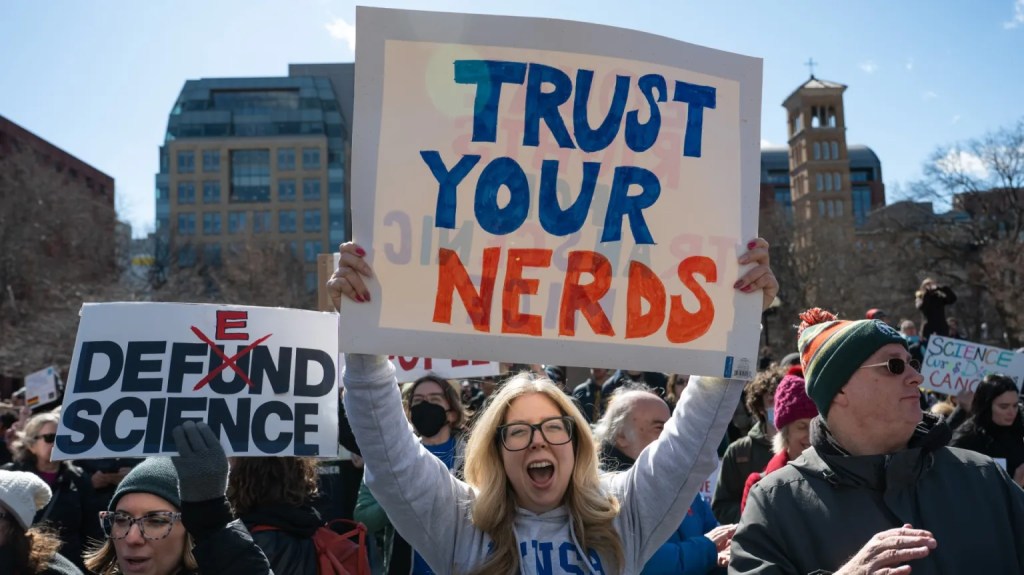
  • Imagine a world without our basic commodities. Imagine a world without antibiotics, where the simplest of infections could equate to a death sentence for you or your loved ones. Imagine a world without the internet, where it takes days to deliver or receive basic information needed to conduct daily life. Picture a world without GPS, where paper maps and guesswork are the only resources available for each of life’s journeys. What you’re imagining isn’t some dystopian episode of Black Mirror; it was our world mere generations ago. The difference? Science.

    However, despite these remarkable advancements in technology, convenience, and medicine, a growing sentiment has emerged that questions the value of science. Some critics and politicians support cutting funding to science-focused agencies. Others, such as RFK Jr., promote harmful anti-vax rhetoric that is rooted in society’s inherent distrust and skepticism of “big brother”. While it is easy to see these theories as valid at surface-level, a closer examination confirms that science is still civilization’s best tool to ensure prosperity, progress, and problem-solving.

    Science as the Engine of Progress and Prosperity

    Let’s dive deeper into one of modern civilization’s greatest discoveries… the internet. The internet has embedded itself into just about every aspect of modern life, and it has revolutionized how we conduct business, learn, and connect with each other. Fundamentally, the technology’s origins lie within the government-funded research agency DARPA (Defense Advanced Research Projects Agency). Similarly, we can examine GPS, which has become ubiquitous within our cars, smartphones, and commercial supply chains. This technology was – you guessed it – developed and designed by scientists under federally-funded grants. It is important to note that these technologies were not developed solely by private sector industries; they required the long-term planning and investment that can only be effectively provided by government funding for public sector agencies and affiliates.

    We can also find compelling arguments for federal funding of scientific research through an analysis of advancements in modern medicine. Antibiotics, which save countless lives every year, were born from decades of federally funded and supported research. The Human Genome Project – a massively complex and time-consuming project that successfully mapped human DNA – cost its creators billions of dollars and thousands of hours to complete. However, this multi-billion dollar investment of time and resources has since jump-started a biotechnology industry that is now worth trillions in GDP to the United States. This is a great example of why these projects are not costs to the US government… they are investments.

    The Importance of Public Funding for Scientific Research

    I will be the first to question government spending on a broad scale. This is not only natural – it is intelligent to do so and a product of a healthy democracy. The ideas of smaller government, lower taxes, and a healthier private sector resonate with many Americans and are foundations of the traditional Republican party. However, it is important to think about this with an educated and informed perspective that is clear of political and personal bias – especially when it comes to funding for scientific research. In light of DOGE efforts to cut federal spending, critics have recently pointed at silly and overfunded studies – such as the infamous “Shrimp on a Treadmill” experiment conducted in 2009 – to argue the idea that scientific research is often frivolous and wasteful. But context matters. Even that study, albeit both frivolous and likely wasteful on an individual level, was part of a broader research effort that has helped us understand marine biology and underwater ecosystems.

    We also have to remember that private companies are driven by private motives. Publicly traded companies have an obligation first and foremost to deliver value to their oft-impatient shareholders. These organizations are unlikely to invest in foundational research efforts, especially if these efforts are unlikely to yield short-term revenue. The public sector has historically bridged this gap, allowing for the type of long-term research that is necessary to generate groundbreaking discoveries and significant societal advancements like the ones mentioned earlier in this essay. Cutting funding to these agencies isn’t “trimming the fat;” it is plugging the pipeline for future innovation.

    Think of it like infrastructure. The construction and maintenance of roads and bridges is far from “sexy,” but neglect them and the economy grinds to a halt. The same can be said for science – it is the backbone of progress. Skimp on it now, and we’ll pay for it later in lost jobs, lagging technology, and unsolved problems.

    The Effectiveness and Safety of Vaccines

    We would be remiss not to consider your conservative relatives’ favorite talking point on Facebook – the anti-vax agenda. The anti-vaccination movement (anti-vax), championed by public “health” figures like RFK Jr. and Andrew Wakefield, is rooted in a deep-seated distrust of large corporations and public institutions. To their credit, it is true that big pharma has eroded public trust by 1. making scientific mistakes in the past, and 2. predatorily commercializing the treatment of illness to the benefit of their bottom line (see earlier paragraph about private sector priorities). However, this is where the evidence parts ways with the narrative.

    Vaccines have been researched, probed, and tested more than just about any other form of medicine in history. We have decades – no, generations – of data that supports the notion that they are both safe and effective. Smallpox is completely eradicated. Polio is close. We had measles on the ropes until this false rhetoric allowed it to creep back into the picture as of late. And I can’t fail to mention the elephant in the room… the “link” between vaccines and autism. Fortunately, this narrative stems from a single study conducted in 1998 that has since been debunked, retracted, and exposed as a fraudulent imitation of real research. In the 27 years since this “study” was conducted, dozens of experiments have been conducted across millions of participants that have found zero connection between vaccines and autism. This argument may sound compelling when it is coming from the mouth of the now-secretary of HHS, but it all starts to crumble with any amount of real examination.

    Regardless, some will still worry about potential side-effects or toxins that humans are exposed to through these vaccines. And it is true; most vaccines are delivered with a warning of rare, yet legitimate adverse reactions. But nothing in life is completely risk-free. Speaking of risk, your risk of dying from measles is about 1 in 1000, or .1%. The risk of a severe reaction to a medically-administered vaccine? About 1 in 1 million, or .0001%. That isn’t a conspiracy; it’s math… so pick your “poison”. Scientists aren’t hiding this from you either; it’s all out in the open for anyone to verify through their own research.

    Science Isn’t Perfect, But It’s Self-Correcting

    I don’t blame you if you’re skeptical of science itself. After all, it has been wrong before and will certainly be wrong again. Phrenology, the Miasma Theory, early climate research, and even initial COVID mask guidelines are all examples of times when science has steered us wrong at some point. Scientists are all humans, with their own biases, egos, and personal agendas, so a lack of trust can be seen as both natural and warranted. If we can’t unilaterally trust any one world leader, ideology, or religion, why should we trust science as one universal truth?

    Here’s the difference: science isn’t an ideology or faith. It’s a method. A method with a motto – observe, test, revise. When science screws up, it leans on guardrails that comprise the foundation of the scientific method: peer-review, replication, and debate. Eventually, error and fraud are caught in one of these nets (like that autism study). Bad ideas are taken out back. Let’s compare that methodology with anecdotes, narratives, and ideologies… where are the guardrails there? Science never demands blind trust; it invites scrutiny. Dismissing it because it is imperfect is like totaling your car because it needs an oil change.

    The Real Cost of Anti-Science Sentiment

    Let’s take a step back to end this essay. RFK, DOGE, and the modern Republican party’s anti-science ideology – doubting the value of research and rejecting what science knows as fact – might feel like a refreshing stance against liberal manipulation and government overreach. But it’s a stance that comes with real consequences. Climate change, pandemic prevention, and the modern “space race” of technology competition aren’t just partisan talking points; they’re real issues that will eventually touch the lives of every American. Science gives us our best chance at standing up to these challenges. Not because it’s perfect, but because it’s rooted in evidence and thorough testing – instead of hunches and talking points. 

    Supporting the current administration’s effort to slash funding for scientific research doesn’t make you prudent or anti-establishment; it makes you short-sighted. Our country is faced with a clear choice: back the community that has doubled our lifespans and built the modern world, or roll the dice with combative rhetoric and a desire for constant change from the current state. I’d argue that science has earned its place in our society. I’m not asking you to blindly believe everything that comes out of the mouths and labs of “experts” – I am asking you to trust a process that has proven to us that it works.

    + ,